
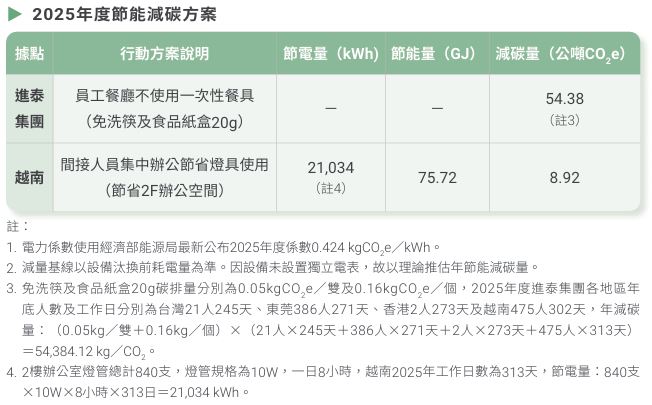
Energy Conservation and Carbon Reduction Measures:
NAE is committed to achieving a net-zero target by 2050. We look forward to working with our customers, suppliers, employees, and other stakeholders to achieve this goal. To improve the efficiency of energy and material resource utilization, NAE actively improves product and process design to reduce waste such as scrap and rework. Simultaneously, we are actively evaluating various renewable energy solutions, including solar power and green electricity purchase programs. In September 2023, the Group selected its Dongguan Chashan plant, equipped with photovoltaic power generation facilities, as a new key production site to increase the proportion of renewable energy used. Furthermore, the Group also considers energy performance as a key evaluation criterion when selecting suppliers, purchasing equipment, and choosing materials.
Related energy conservation and carbon reduction actions include:
- Implement regulations for lights-out and air conditioning use in office and factory areas.
- Replace lighting with motion-sensor and LED lighting.
- Implement digitized documentation to reduce paper waste.
- Do not use disposable tableware.
- Provide employee shuttle buses and encourage carpooling; utilize shared workspaces.
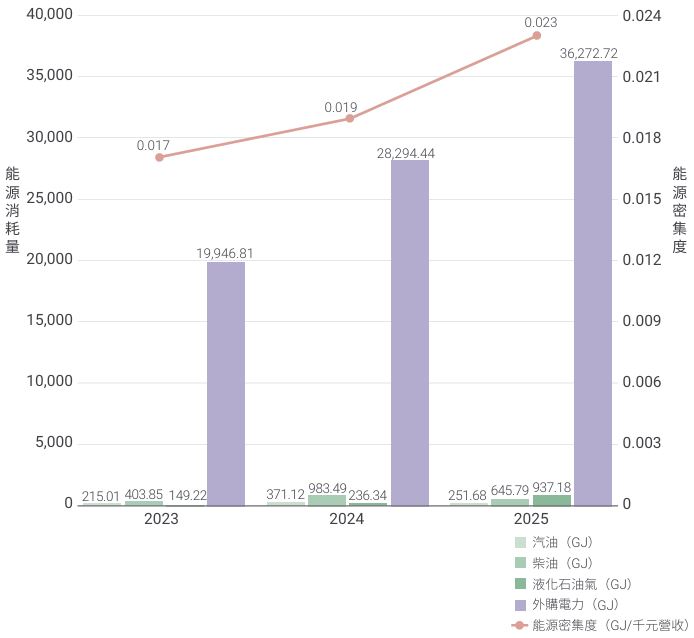
Energy consumption intensity statistics:
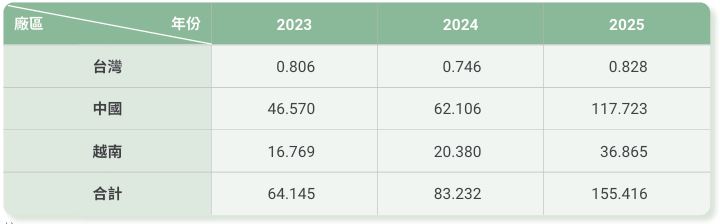
Water resource management and use:
The total water intake in 2025 is 155.416 million liters, mainly for domestic and industrial use. Due to the expansion of operations and the increase in the number of employees at the Vietnam plant in 2025, coupled with the fact that the China plant officially started mass production in May 2024 after relocating, water consumption in 2025 will increase by 72.184 million liters compared to the previous year.
Note:
- The water intake statistics cover NAE(Taiwan), NAE(Vietnam), NAE(Dongguan), Zhenshun(Dongguan), and Advanced Sound Technologes, Inc. NAE(Hong Kong) is not included in the statistics due to difficulties in obtaining water intake data.
- Tap water intake is based on water bills.
- Drainage data is unavailable due to the lack of water meters; therefore, there are no drainage and water consumption statistics.
Waste Management:
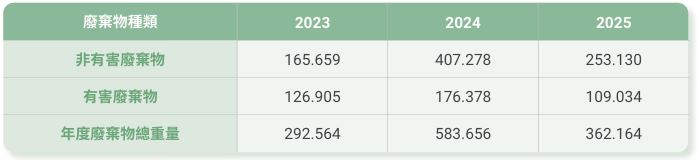
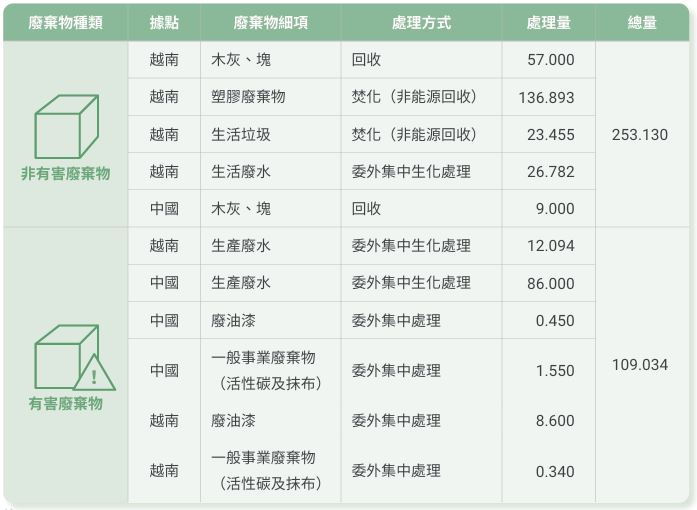
In 2025, NAE generated a total of 362.164 metric tons of waste, of which 253.130 metric tons were non-hazardous waste and 109.034 metric tons were hazardous waste. Moving forward, we will continue to monitor trends in various types of waste and gradually increase resource recycling rates to reduce the environmental impact of our operations.
♦ Waste Statistics for the Past Three Years:
♦ Detailed List of Waste Generation and Treatment Methods in 2025
Note:
- The data statistics cover waste from NAE’s factories in Vietnam and China. Waste is categorized into non-hazardous and hazardous waste. Non-hazardous waste is further subdivided into: wood ash, wood chips, plastic waste, domestic garbage, and domestic wastewater; hazardous waste is subdivided into: industrial wastewater, waste paint, and general industrial waste (activated carbon and rags).
- Except for wood ash and wood chips, which are processed on-site, all other waste from NAE is disposed of off-site.