Corporate Sustainability

Policies & Commitments

Message from the ESG Committee Chairman:

In recent years, global industries have faced multiple challenges, including geopolitical tensions, inflationary pressures, supply chain restructuring, the rapid development of artificial intelligence (AI), and increasingly stringent net-zero emissions and sustainability regulations. In addition to pursuing steady growth, companies must also consider environmental protection, social responsibility, and corporate governance, integrating sustainability into their core strategies to enhance long-term competitiveness and create sustainable value.

NAE is committed to the research, design, and manufacturing of professional audio products. We continuously deepen our expertise in acoustics, electronics, mechanics, wood products, and software integration technologies, providing complete product solutions for internationally renowned audio brands. Facing rapidly changing market demands, we continuously invest in technological innovation, process improvement, and smart manufacturing to enhance product quality, operational efficiency, and supply chain resilience. Through our global production capacity layout, we offer customers more flexible and efficient services.

Sustainable development has become a core element of business operations. NAE integrates ESG principles into its daily operations and decision-making processes, and takes “environmental sustainability, social prosperity, and integrity governance” as its three main axes of sustainable development to continuously improve corporate governance quality and sustainable competitiveness.

Regarding environmental sustainability, we continuously promote energy conservation and carbon reduction, energy management, and process optimization. By improving equipment efficiency, reducing energy consumption, and strengthening resource recycling, we gradually reduce the environmental impact of our operations. At the same time, we continue to improve our greenhouse gas inventory and carbon management systems, actively responding to the global net-zero emissions trend and our customers’ expectations for a low-carbon supply chain, steadily moving towards low-carbon manufacturing and sustainable operations.

In terms of social responsibility, we uphold the “people-oriented” philosophy, creating a safe, healthy, diverse, and friendly work environment. We value talent development, career advancement, and employee care, and continuously improve our occupational safety and health management so that employees can work with peace of mind and utilize their professional skills. At the same time, we actively engage in social welfare, care for community development, and give back to society with our corporate strength, creating shared value.

In terms of corporate governance, we continuously improve the functions and governance system of the board of directors, implement integrity management, risk management and internal control mechanisms, enhance the transparency of information disclosure, incorporate sustainability issues into corporate business decisions, and build a mutually trusting and cooperative relationship with shareholders, customers, suppliers, employees and other stakeholders to jointly build a sustainable supply chain and a solid business foundation.

Looking ahead, NAE will continue to deepen its core technology research and development, actively develop high-value-added products, strengthen its smart manufacturing and digital transformation capabilities, and enhance product competitiveness and operational efficiency. We will also continue to promote low-carbon transformation, sustainable supply chain management, and corporate resilience building to respond to rapid changes in the global market and international sustainability trends, moving towards becoming a sustainable enterprise that balances economic, environmental, and social value.

Sustainable development has no end, but is a journey of continuous improvement. In the future, NAE will uphold the business philosophy of integrity, innovation, quality, and sustainability, and work hand in hand with all colleagues, customers, suppliers, and all stakeholders to meet new challenges and opportunities, continuously create long-term value, and realize the vision of sustainable business operations.

Sustainability Governance Structure:

NAE established an ESG Project Working Group in 2024 and a Sustainability Committee in May 2025. The Board of Directors of NAE is the highest supervisory body for corporate sustainability. The Sustainability Committee, established by the Board, is responsible for:

  • Formulating, promoting, and strengthening the company’s sustainability policies, annual plans, and strategies.
  • Reviewing, tracking, and revising the implementation and effectiveness of sustainability initiatives.
  • Supervising sustainability information disclosure and reviewing sustainability reports.
  • Supervising the implementation of the company’s sustainability code and other sustainability-related work resolved by the Board.

The Chairman and General Manager’s Office of NAE has formed a cross-departmental Corporate Sustainability Promotion and Risk Assessment Team, convened by the General Manager. This team is responsible for resolving major themes in the annual sustainability report and formulating sustainability strategies. It also monitors the impact of ESG aspects on the external environment, society, and economy, and regularly reports the results to the Sustainability Committee and the Board of Directors. The Corporate Sustainability Promotion and Risk Assessment Team, under the General Manager, is divided into six working groups: “Corporate Governance,” “Environmental Sustainability,” “Employee Care,” “Social Engagement,” “Customer Care and Product Management,” and “Sustainability Information Disclosure.” These groups are tasked with comprehensively advancing sustainability plans and actions across all aspects of the company’s operations.

Significant Issues Identification and Analysis:

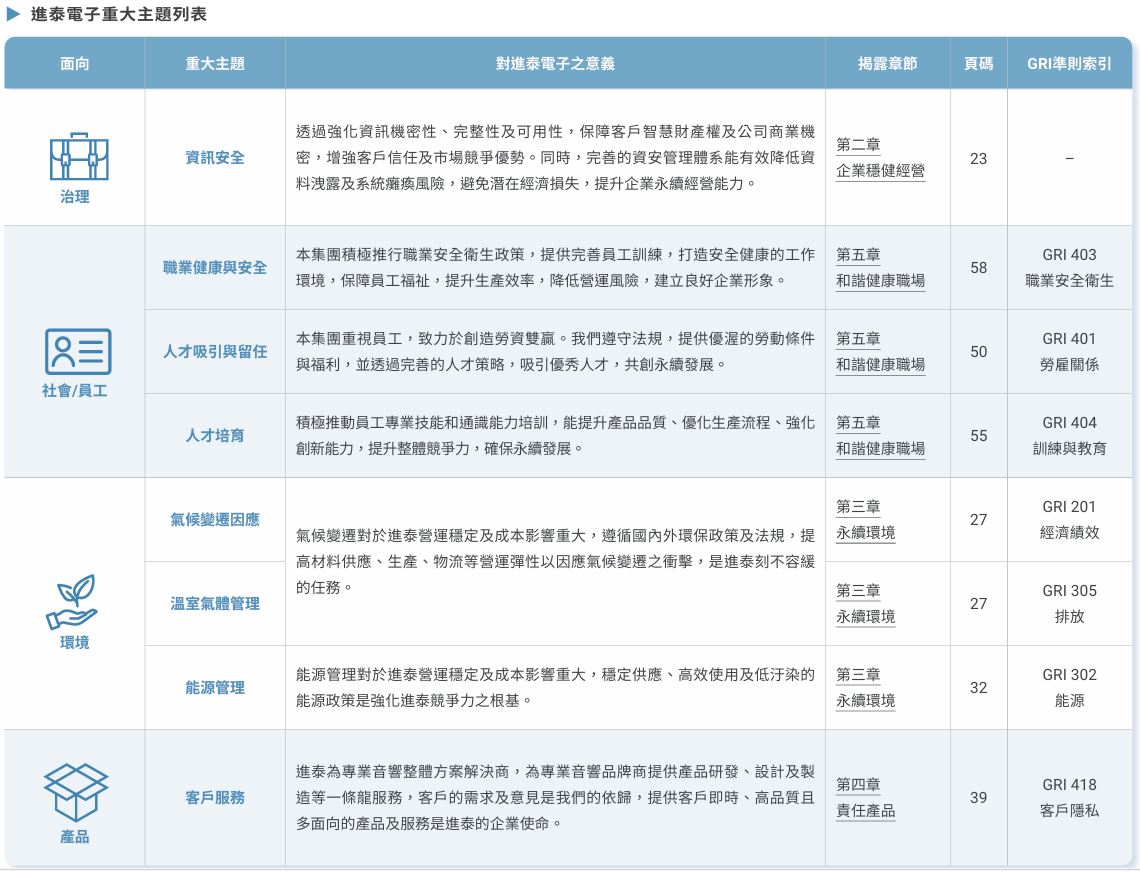
In 2025, in accordance with the ” Taipei Exchange Rules Governing the Preparation and Filing of Sustainability Reports by TPEx Listed Companies “, NAE used the GRI general criteria (GRI Universal Standards 2021) to identify NAE’ key stakeholders and the degree of impact of various sustainability issues. In addition to serving as the management policy for the sustainability report, this can also be used to review the company’s current sustainability status, continuously promote the implementation of relevant policies, and create value for society and the company.

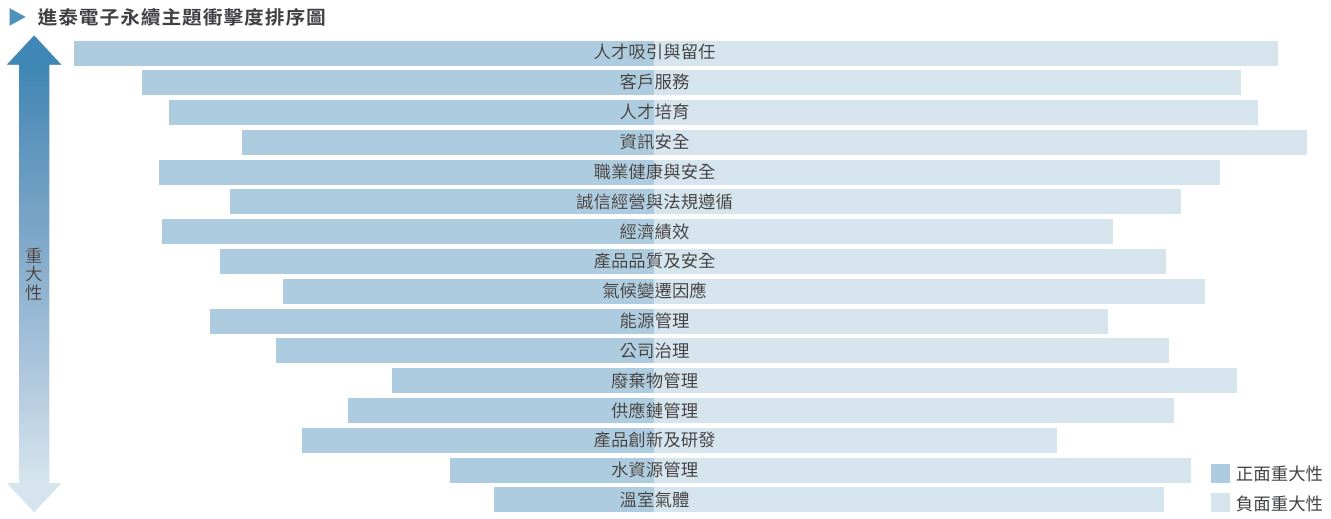
 

Risk assessment criteria, process, results, and risk management policies or strategies for material issues:

Please refer to the disclosure sections of each material issue in the company’s sustainability report and the company’s annual report (V) performance of corporate sustainable development and the differences between the Corporate Sustainable Development Best-Practice Principles for TWSE/TPE Listed Company and reasons.

Report to the Board at least annually and Board’s oversight of Sustainability:

The company reports to the Board quarterly on the schedule for greenhouse gas inventory and verification for the company and its subsidiaries.

On May 2, 2025, the company submitted to the Board the “Organizational Regulations of the Sustainability Committee” and the “Operating Procedures for the Preparation and Verification of the Sustainability Report.”

On August 12, 2025, the company submitted to the Board for review of the 2024 Sustainability Report.

On August 12, 2025, the Company submitted to the Board the revised “Organizational Regulations of the Sustainability Committee.”(Amended under the supervision of the Board)

On August 4, 2026, the company submitted to the Board for review of the 2025 Sustainability Report.

The Board of Directors hears reports from the “Corporate Sustainability Promotion and Risk Assessment Team”, assesses the feasibility and success of each plan, monitors the progress and ultimate benefits of the plans, and provides timely guidance to the management team and the “Corporate Sustainability Promotion and Risk Assessment Team”. If necessary, adjustments and revisions are required. The Board of Directors continues to supervise the progress of corporate sustainability promotion.